
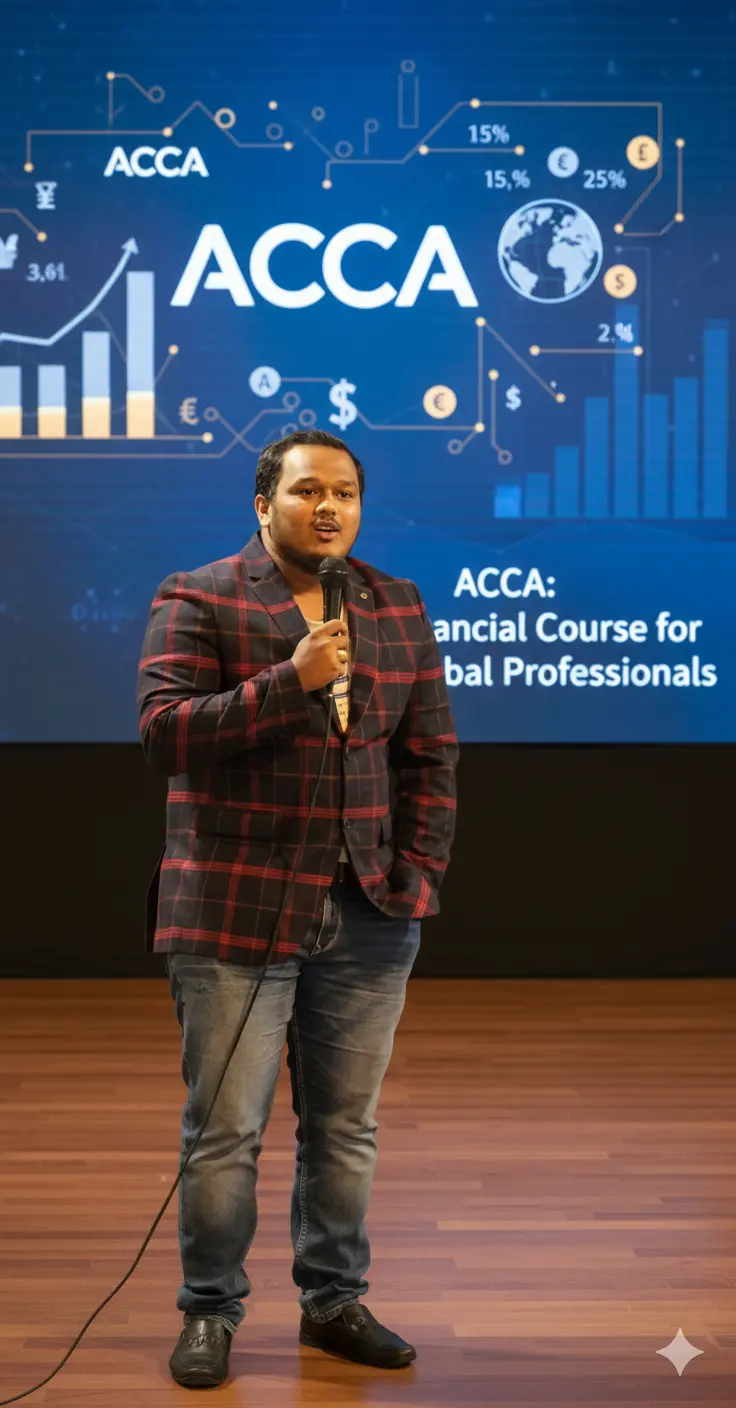
By Sai Manikanta Pedamallu (ACCA, CMA, MBA) Senior ACCA Tutor | 15+ Years of Experience
1. What is ACCA Performance Management (PM) and Why Does It Matter?
ACCA Performance Management (PM) evaluates your ability to apply management accounting techniques to support decision-making, planning, and control. It tests advanced costing, budgeting, performance measurement, and strategic analysis under the latest 2026 ACCA syllabus.
Key Reasons PM Matters:
- Core for ACCA: PM is a mandatory exam in the Applied Skills level.
- Career Impact: Mastery of PM opens doors to roles like Management Accountant, Financial Analyst, or Business Partner: positions that command high salaries (see Top 10 High-Paying Career Paths for ACCA Affiliates (2026 Guide)).
- Global Recognition: PM aligns with CIMA, CMA, and other global finance qualifications, enhancing mobility.
2. How to Structure Your PM Study Plan for 2026 Success
Step 1: Understand the 2026 PM Syllabus Breakdown
The PM exam (100% exam-based, 3 hours) covers six key areas under the 2026 syllabus:
| Syllabus Area | Weight (%) | Key Topics |
|---|---|---|
| 1. Cost Accounting | 20% | Activity-based costing, marginal vs. absorption costing, cost-volume-profit (CVP) analysis |
| 2. Budgeting | 25% | Budgetary systems, flexed budgets, rolling budgets, beyond budgeting |
| 3. Standard Costing | 15% | Variance analysis (material, labour, overhead), mix & yield variances |
| 4. Performance Measurement | 20% | Balanced scorecard, ROI, RI, EVA, non-financial KPIs |
| 5. Decision-Making | 10% | Relevant costing, limiting factors, pricing strategies, make-or-buy decisions |
| 6. Risk & Control | 10% | Risk management, internal controls, governance in performance management |
Step 2: Allocate Study Time Efficiently
- Total Study Hours: 120–150 hours (for working professionals).
- Weekly Plan (12 weeks):
- Weeks 1–4: Focus on Cost Accounting & Budgeting (40% of exam weight).
- Weeks 5–8: Master Standard Costing & Performance Measurement (35% weight).
- Weeks 9–12: Drill Decision-Making & Risk (25% weight) + Mock Exams.
Step 3: Use ACCA-Approved Study Materials
- Official ACCA PM Study Text (2026 Edition) – Purchase here.
- BPP or Kaplan Revision Kits – For practice questions.
- ACCA Practice Platform – For CBE-style mocks.
3. Top 5 PM Exam Techniques to Maximise Marks
Technique 1: Master Variance Analysis (Standard Costing)
Variance analysis is high-weightage (15%) and frequently tested. Use the three-step approach:
- Calculate the variance (e.g., Material Price Variance = (SP – AP) × AQ).
- Explain the variance (favourable/unfavourable).
- Provide business insights (e.g., "Higher material costs may indicate supplier price increases").
Pro Tip: Memorise the variance formulas and practice mix & yield variances (common in past papers).
Technique 2: Budgeting – Flexed vs. Fixed Budgets
- Fixed Budget: Static, no adjustments for activity levels.
- Flexed Budget: Adjusts for actual output (critical for variance analysis). Example Question:
"Actual production was 1,200 units, but the budget was 1,000 units. How do you flex the budget?" Answer: Multiply budgeted costs by 1,200/1,000 = 1.2 to compare fairly.
Technique 3: Performance Measurement – Balanced Scorecard
The Balanced Scorecard (BSC) evaluates performance across four perspectives:
- Financial (ROI, profit margins)
- Customer (satisfaction, market share)
- Internal Processes (efficiency, quality)
- Learning & Growth (employee training, innovation)
Exam Tip: Link BSC to strategy, e.g., "Increased training (Learning) improves process efficiency (Internal), leading to higher customer satisfaction (Customer) and profits (Financial)."
Technique 4: Decision-Making – Relevant Costing
Only future, incremental costs matter in decisions. Ignore:
- Sunk costs (already incurred).
- Allocated overheads (unless avoidable).
Example:
"Should a company make or buy a component?" Solution:
- Make: Variable costs + avoidable fixed costs.
- Buy: Purchase price + any additional costs. Compare total relevant costs.
Technique 5: Risk & Control – EVA vs. ROI
- ROI (Return on Investment): Profit / Investment.
- EVA (Economic Value Added): NOPAT – (WACC × Capital Invested). Why EVA is better: Accounts for cost of capital, unlike ROI.
Exam Application:
"A division has ROI of 15% but WACC is 10%. Should it expand?" Answer: Yes, because EVA = Positive (ROI > WACC).
4. Common PM Exam Mistakes to Avoid
| Mistake | Why It’s Costly | How to Fix It |
|---|---|---|
| Ignoring written explanations | Lose 2–4 marks per question. | Always explain variances/calculations in sentences. |
| Poor time management | Running out of time in Section B (60 marks). | Spend 1.8 mins per mark (e.g., 15 mins for a 10-mark question). |
| Not practicing CBE format | Struggle with navigation in the real exam. | Use ACCA’s Practice Platform for mocks. |
| Memorising without understanding | Struggle with scenario-based questions. | Focus on applying concepts to case studies. |
| Skipping past papers | Unprepared for exam patterns. | Attempt at least 5 past papers under timed conditions. |
5. Recommended Resources & Next Steps
Free Resources:
- ACCA PM Syllabus & Study Guide (2026): Download Here
- Free ACCA PM Study Plan: Get Yours Here
- PM Formula Sheet: Download PDF (Link to be added)
Paid Resources:
- ACCA PM Revision Kit (BPP/Kaplan): £50–£80.
- ACCA PM Tuition Videos (Global Fin X): [Enroll Now](/acca-financial-management-fm
/acca-financial-management-fm)
Next Steps:
- Register for PM Exam: Follow the ACCA Exam Registration Guide 2026.
- Balance Work & Study: Use 7 Proven Study Hacks for Professionals (2026 Guide).
- Explore Career Paths: Check Top 10 High-Paying Career Paths for ACCA Affiliates (2026 Guide).
6. Final Tips from a Senior ACCA Tutor
- Active Learning > Passive Reading: Use flashcards for formulas and mind maps for concepts.
- Teach Someone Else: Explaining PM topics reinforces your understanding.
- Stay Updated: Follow ACCA’s 2026 syllabus changes via ACCA’s Official Updates.
- Health & Mindset: Prioritise sleep and breaks: burnout kills retention.
Remember: PM is not about memorisation. It’s about application. The more you practice real-world scenarios, the higher your chances of scoring 60+ marks.
Ready to conquer the ACCA exams?
📌 Download our [Free ACCA Study Plan](/acca/free-resources -> /acca/free-resources) /acca/course-fee -> /acca/course-fee (NO MATCH FOUND) /acca/free-resources -> /acca/free-resources (NO MATCH FOUND) /acca/course-fee -> /acca/course-fee (NO MATCH FOUND) /acca/free-resources -> /acca/free-resources (NO MATCH FOUND) /acca/course-fee -> /acca/course-fee (NO MATCH FOUND) /acca/free-resources) or 📌 [Enroll Now](/acca/financial-management-fm -> /acca/financial-management-fm) to start your professional journey with Global Fin X.
About the Author: Sai Manikanta Pedamallu (ACCA, CMA, MBA) is a Senior ACCA Tutor with 15+ years of experience guiding students to exam success. His teaching approach blends technical rigour with real-world application, ensuring learners ace ACCA exams with confidence.
Connect with Sai: 🔗 LinkedIn | 📧 Email | 🌐 Global Fin X
Related Articles:
- Top 10 High-Paying Career Paths for ACCA Affiliates (2026 Guide)
- The Cost of ACCA: A Full Breakdown of Fees and Expenses (2026 Guide)
- ACCA Ethics and Professional Skills Module (EPSM) 2026 Guide
- Balancing Work and ACCA: 7 Proven Study Hacks for Professionals (2026 Guide)
- ACCA Strategic Business Reporting (SBR): Mastering Group Accounts (2026 Guide)